
WhatsApp Chatbot vs. Live Chat: Which Is Better for Singapore Businesses?
Comparing WhatsApp chatbots and live chat for Singapore businesses. Discover which solution offers better ROI, customer satisfaction, and scalability for your business.
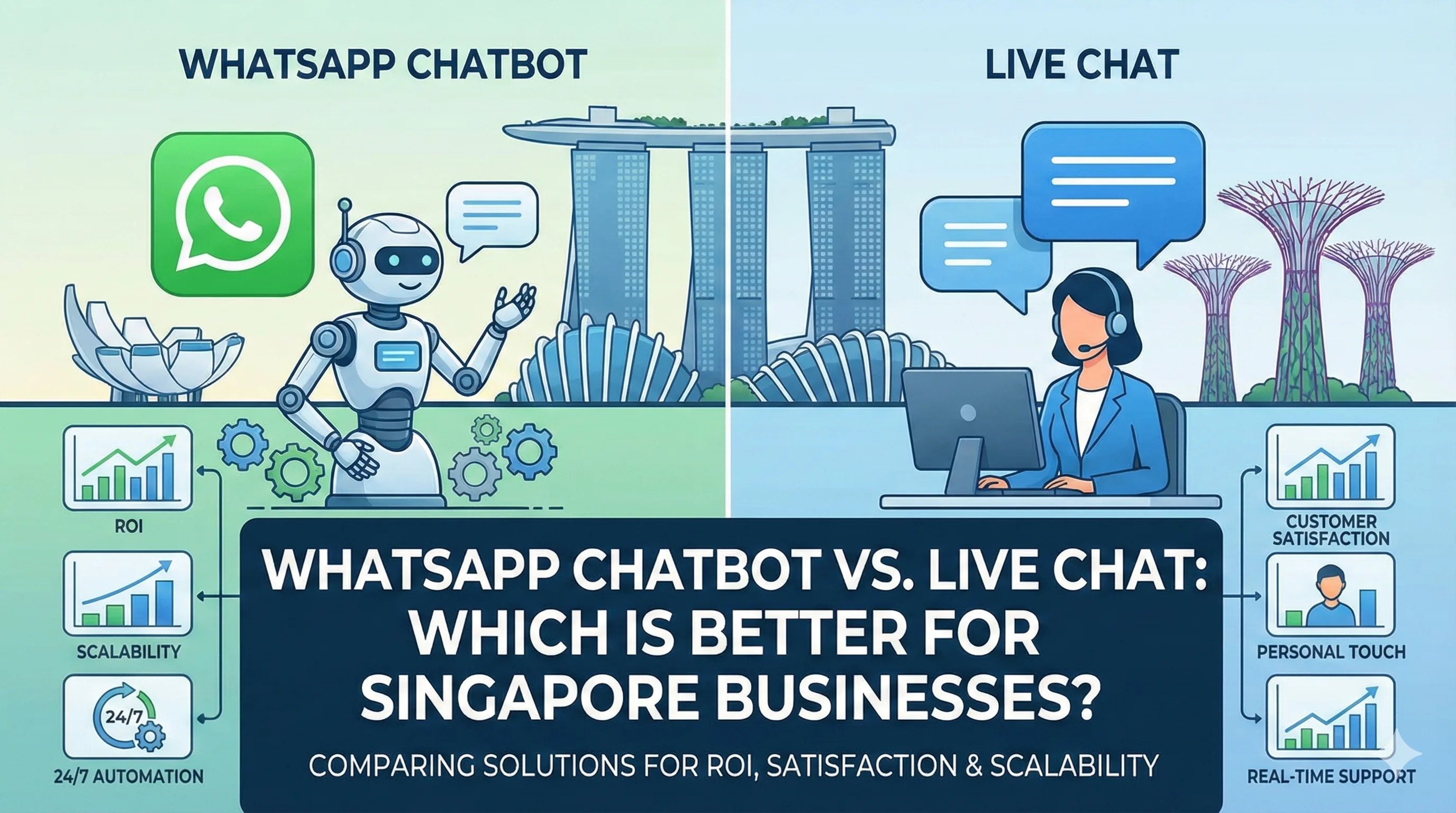
When it comes to customer communication, Singapore businesses face a critical choice: should you invest in a WhatsApp chatbot or stick with traditional live chat on your website? Let's break down the pros, cons, and real costs of each.
The Key Differences
While both solutions aim to help you communicate with customers, they work in fundamentally different ways:
| Feature | WhatsApp Chatbot | Live Chat |
|---|---|---|
| Availability | 24/7 automated | Business hours only (unless staffed) |
| Where customers reach you | WhatsApp (app they already use) | Your website only |
| Conversation continuity | Chat history saved in WhatsApp | Lost when visitor leaves site |
| Staffing required | None (AI-powered) | 1–3 agents minimum |
| Monthly cost | S$229/month | $150–$500+ (plus agent salaries) |
| Multilingual | 50+ languages (auto-detect) | Depends on agents hired |
| Voice messages | ✅ Supported | ❌ Not supported |
| Mobile experience | Native WhatsApp app | Small chat widget |
Why WhatsApp Wins for Singapore Businesses
1. Customers Are Already on WhatsApp
In Singapore, 85% of smartphone users have WhatsApp. When you offer customer support via WhatsApp, you're meeting customers where they already are — no need to ask them to visit your website.
2. Conversation Doesn't End
With live chat, the conversation disappears when the customer closes the browser tab. With WhatsApp, the entire chat history is saved. Customers can come back days later and continue the conversation seamlessly.
3. No Staffing Headaches
Live chat requires hiring agents to handle conversations in real-time. During peak hours, customers wait in queues. Off-hours, they get no response at all. A WhatsApp AI chatbot can handle a high volume of conversations simultaneously, 24/7.
4. Superior Mobile Experience
Over 70% of web traffic in Singapore comes from mobile devices. Live chat widgets on mobile are clunky and small. WhatsApp provides a full-screen, native messaging experience that customers love.
5. Higher Response Rates
WhatsApp is already familiar to many customers, which can make it a practical channel for timely business conversations and follow-up.
When Live Chat Still Makes Sense
Live chat isn't dead — it still works well in specific scenarios:
- E-commerce sites where customers browse and have immediate questions about products
- SaaS companies with complex technical support needs
- Businesses with large support teams already in place
However, even in these cases, adding a WhatsApp chatbot as a complementary channel can capture leads that would otherwise be lost.
Cost Comparison for Singapore SMEs
Let's look at the real monthly costs:
- Live chat with 1 agent: $3,500–$4,500/month (agent salary + software)
- Live chat with 3 agents (for coverage): $10,000–$13,000/month
- AI Super: S$229 per month or S$199 per month with yearly billing
That's a potential savings of $40,000–$150,000 per year — while providing better, faster customer service.
The Verdict
For most Singapore businesses — especially SMEs, service providers, and local businesses — a WhatsApp chatbot is the clear winner. It's more affordable, more accessible to customers, and provides a better experience than live chat.
The best approach? Use a WhatsApp AI chatbot as your primary customer communication channel, and add live chat only if your specific business case demands it.
